Roksana Tomyshch, ROLEKSA (Lviv): “Helping veterans learn to accept themselves anew”
Roxana, when did you start working with Dental Help UA? What was that like?
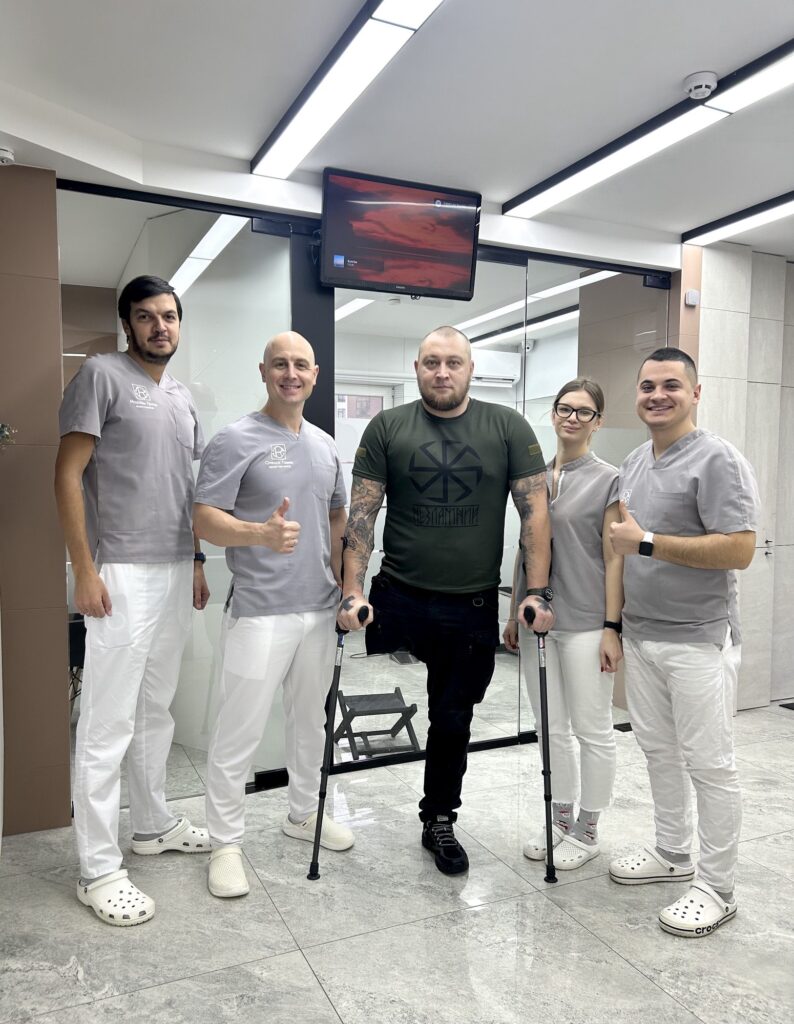
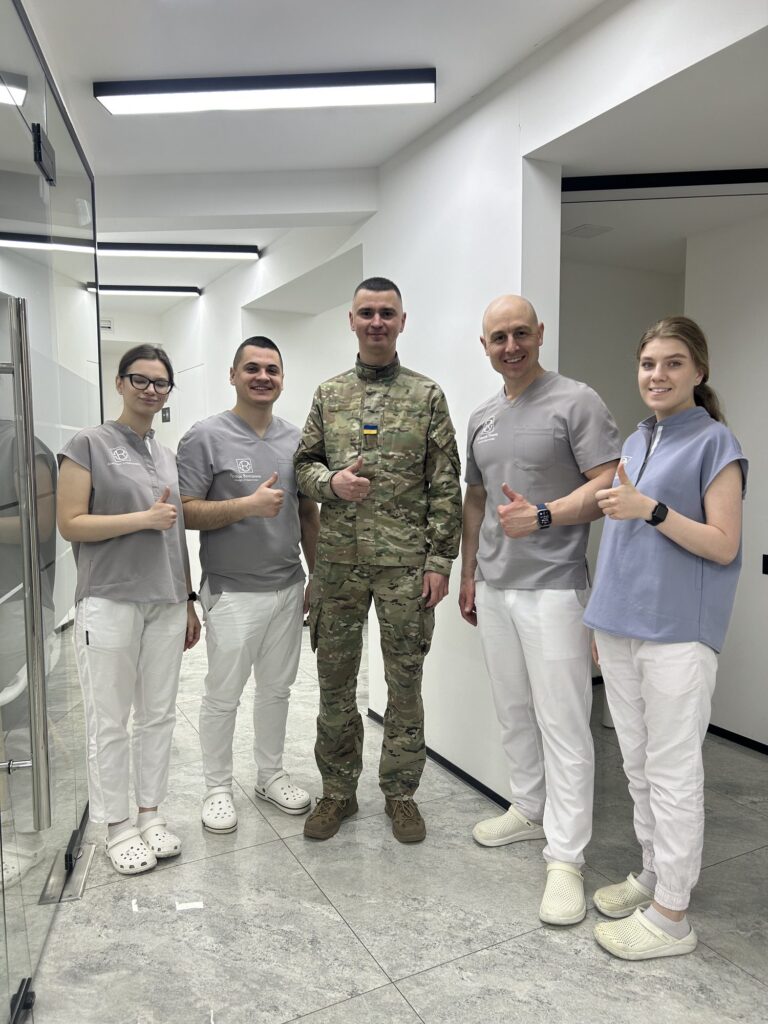
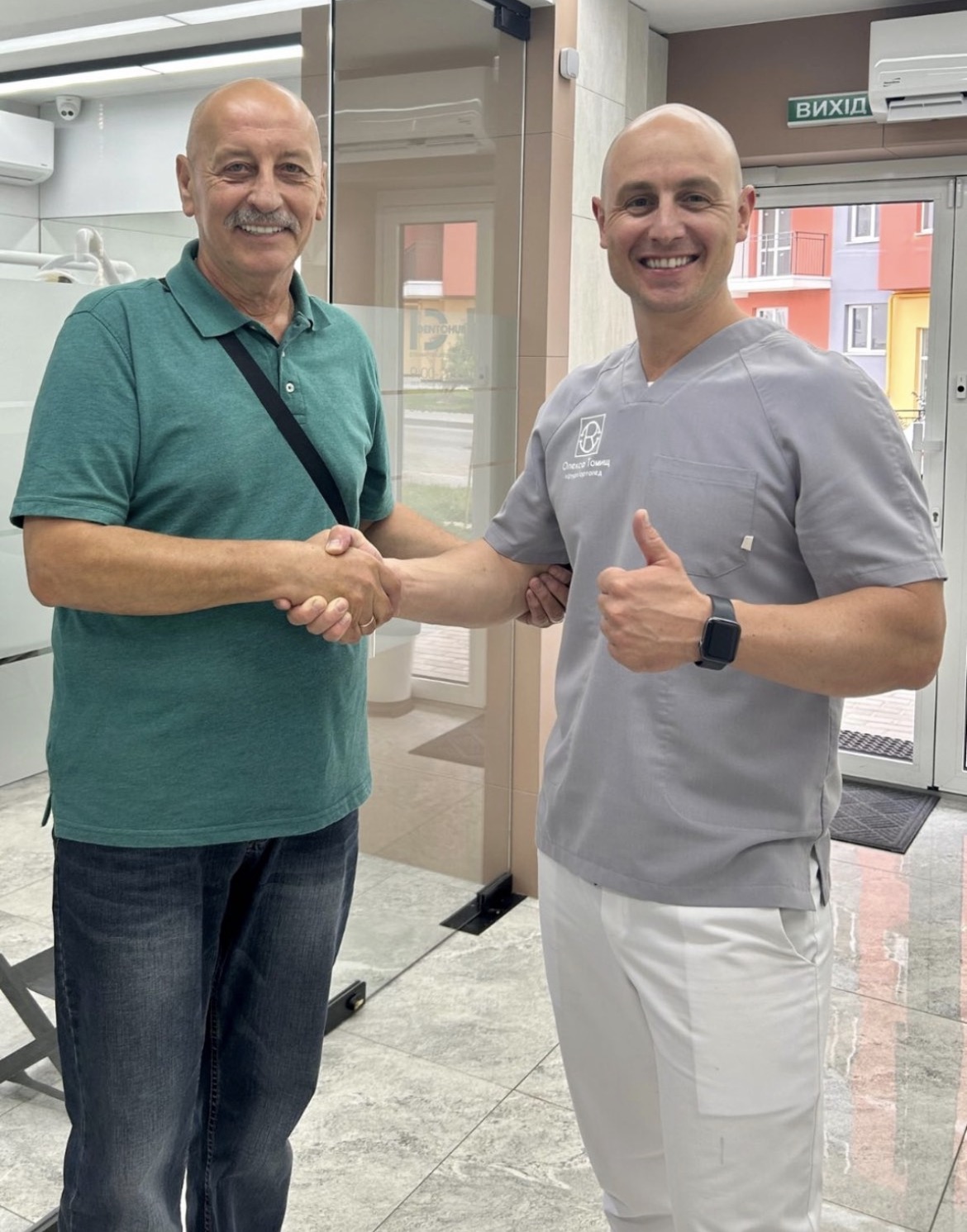
Clinic ROLEKSA was one of the first to join the “Give a Hero a Smile” initiative, even before the foundation was established. When the first implants started arriving, my husband, Oleksa Tomyshch, began performing dental restorations for military personnel—both at our clinic and at others, as a guest surgeon.
Why is it important to you to volunteer for the foundation and care for veterans?
I believe that right now, every conscientious Ukrainian should do something for the good of Ukraine to bring victory closer. And since the best thing I know how to do in life is to treat people, the focus of my help is obvious.
However, my volunteer work began even before the full-scale invasion. Together with fellow dentists from all over Ukraine, we traveled to the Donetsk region, to the village of Karlivka, which is located 17 km from Donetsk Airport. A support center for military personnel was operating there. We traveled there on a rotating basis to treat the soldiers. With the start of the full-scale invasion, we joined as volunteers to sort medications and perform other tasks, because any kind of involvement is valuable—whatever you can do to be helpful at any given moment.
What is the most challenging aspect of working with veterans—both professionally and personally?
Indeed, there are daily challenges in working with our veteran defenders, and my team and I are courageously navigating this path. I would divide these difficulties into two categories: those of a medical nature and the social and psychological characteristics of the patients.
When it comes to medical cases, these are typically the consequences of severe maxillofacial injuries; they may involve people with amputated limbs, for whom oral care is significantly more difficult, and these specific circumstances must be taken into account. We can also include patients who have previously undergone numerous surgical procedures. The treatment process is also affected by the side effects of antibiotic use, as healing takes longer and is less effective in these patients. Furthermore, most military personnel are heavy smokers. This presents its own challenges when performing various procedures. A major medical challenge is difficulty accessing the oral cavity due to various facial injuries, scarring, and other factors, making it hard for the patient to open their mouth.
The social and psychological challenges stem from the fact that veterans must relearn how to perceive themselves, as they often lose limbs, which significantly affects their self-perception and self-esteem. In addition, they may have heightened reactions to various sensory stimuli as a result of numerous previous surgical procedures. Dental procedures aren’t exactly a thrill even for civilians, and when it comes to military personnel, we first have to help them adjust psychologically. This adjustment is also necessary for the members of our team, and we already have a great deal of experience in this area. For example, our staff are prepared for the possibility that a patient might arrive today cheerful, inspired, and joking, only to express suicidal thoughts the next day… We weren’t taught this in college, so at ROLEKSA we conduct internal training sessions where we “run through” various psychological scenarios to be prepared for any situation when communicating with veterans… In fact, through the process of dental restoration, we help veterans learn to accept themselves anew…
Returning to medical emergencies. What are the specific challenges of working with veterans who have severe injuries (high amputations, maxillofacial injuries), concussions, PTSD…? Which case particularly struck you or stands out in your memory?
Of course, we have to perform most of the treatment using our equipment, which makes noise. This can cause discomfort for soldiers with concussions. For example, we have a patient who wears dark glasses all the time due to light sensitivity, and we also have two patients who have lost their sight…
The team uses various methods to improve the treatment process for veterans—whenever possible, we dim the lights, and we treat many patients under sedation because we understand that it may be difficult for them to lie still for long periods due to neck and spinal injuries.
When it comes to patients with limited hand function or who wear dentures, we tend to schedule them for professional dental cleanings more often. After all, even a healthy person has trouble brushing their teeth properly, let alone a patient with such complex needs.
As for the cases that made an impression on me, I remember a veteran with a maxillofacial injury—in fact, he was missingmissing half of his upper jawand had lost his vision—incredibly challenging conditions for implant surgery! It was a major professional challenge for the entire team; at first, we had to remove remnants of shells, mines, and so on… Not everything went smoothly right away, but in the end, we’re very pleased with the outcome—after all, we were able to help even in such a complex case.
How can patients with limited hand function brush their teeth?
I know there are some companies that manufacture toothbrushes adapted for such patients, but there are no certified ones on our market. This raises the question: why shouldn’t manufacturers in Ukraine patent a new technology, since we’re currently seeing high demand for these specialized toothbrushes?
Clinic Inclusivity – How Does ROLEKSA Accommodate Patients’ Special Needs?
Our clinic fully meets all inclusion requirements—there is a special wheelchair ramp, a restroom adapted for patients with special needs… Our administrators have already thoroughly reviewed the needs of all our visitors and know who needs assistance and who does not. Often, patients have already learned to navigate the entrance on their own and decline this assistance.
I recall an interesting situation where a patient in a wheelchair had a flat tire on the way here. While he was receiving treatment at our clinic, we quickly arranged for the tire to be repaired. We do everything possible to ensure that such patients have a comfortable stay with us.
Which veteran stands out most in your memory, and why? Can you recall any interesting moments from your interactions with a veteran?
Yes, I remember one of our first patients, who later became our ambassador and advocate. He supported us on all social media platforms, responded to negative comments, and explained how the dental business works.
Another observation: after undergoing complete dental rehabilitation, veterans seem to instantly look younger! A smile acts as an elixir of youth, and it’s truly heartwarming to see veterans happy.
How does the clinic’s team help you in your work with veterans?
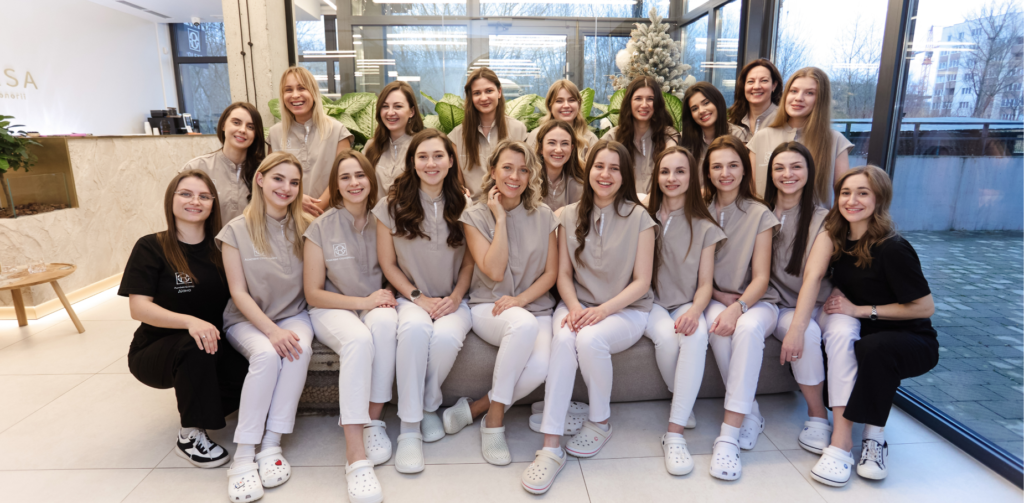
Restoring smiles is entirely a team effort. And we are immensely proud of our team of doctors, assistants, and administrators! All ROLEKSA specialists enjoy working with military personnel, as everyone feels a sense of purpose and belonging to a great and noble cause. Military patients are very grateful; you can feel the exchange of positive energy throughout the treatment process. For example, one patient quit smoking, saying that he could see how hard we were working and didn’t want his bad habit to get in the way of achieving results. Our team is constantly receiving chocolates from our veteran patients, who also donate potted plants to the clinic, and one patient even sculpted a vase shaped like a tooth with the inscription “ROLEKSA”…
At the same time, we understand that when we take on a veteran for rehabilitation, it’s not just the implant procedure that’s free—it’s the entire process from start to finish, and it’s free for the patient. The only thing veterans pay for is hygiene products, because that’s how we teach them to take care of their teeth. This approach works for everyone at the clinic.
What message would you convey to colleagues who haven’t yet joined Dental Help UA?
You’ll receive uniquely emotional feedback while treating military patients—something you won’t get when treating civilians. This is an extraordinary opportunity to feel needed and to find the greatest sense of fulfillment in your profession.
At the same time, all owners of modern dental practices understand that providing completely free treatment can place a significant financial burden on their practices. For example, ROLEKSA consistently treats veterans, and their treatment is long-term—sometimes lasting several years. We break the treatment down into stages and calculate how many veterans we can provide full rehabilitation for within a given time frame. In this situation, the help of fellow professionals becomes absolutely essential. The number of veterans is growing every day, and the strength of the community is needed now more than ever—by volunteer doctors, veterans, and the country. After all, a smiling veteran represents a chance for a happy social life.
If every doctor determines how many service members they can take on for rehabilitation each year, that alone would be an incredible source of support, and the number of veterans we can help would increase significantly. In an ideal world, such treatment would be fully covered by government programs, but in reality, we can count on the support of the dental community. So my call to my colleagues is this: join Dental Help! Join a community that is actually giving veterans back the chance to eat normally, smile, get married, find jobs—to live their lives.
Together toward victory!