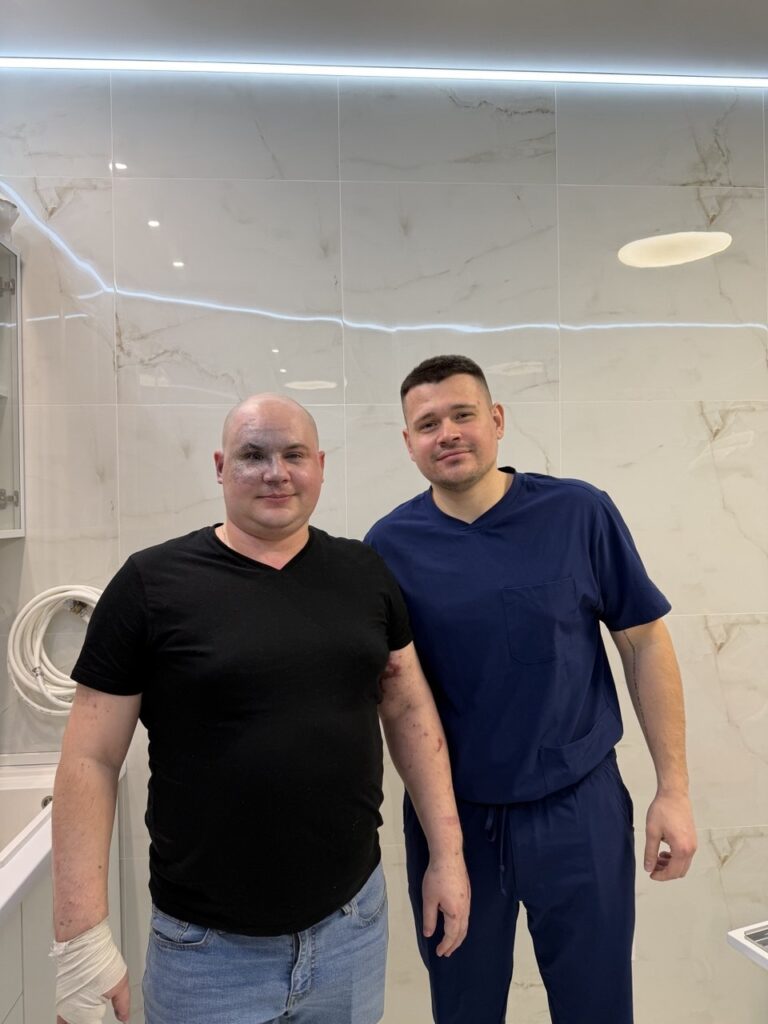
"Put a smile back on a hero's face". Yevhen Hnatenko, surgeon, chief physician of Klinik Im Zentrum, Odesa
Yevhen, please share your own story about the beginning of the full-scale invasion. What were your decisions, actions, and emotions then?
Back in 2018, I did an internship at a military hospital in Odesa and operated on soldiers. In February 2022, I had three days to think about my next steps. All my family and friends left the city, and I, along with my two friends, also interns, decided to be useful here. We realized that we had to do something now, because tomorrow might not come. So we came to the military hospital, where our teacher was working at the time, and offered our help. So, for almost a year, we literally lived on the territory of the institution, practically never leaving it. We worked there, ate there, lived there…
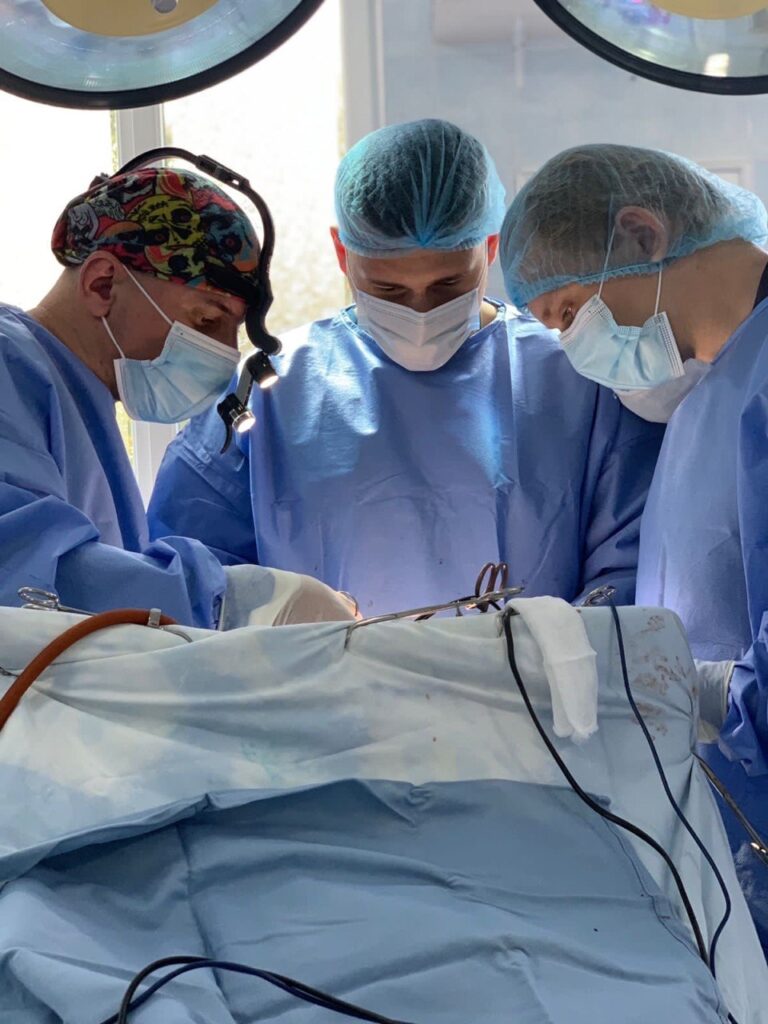
Every day we conducted operations. There were more and more wounded, and the cases were becoming more complicated and difficult. We, as surgeons, were dealing with very diverse cases of maxillofacial and mine-blast injuries. Before the full-scale invasion, only more experienced surgeons performed such operations. In 2022, there were virtually none left in the hospital, so my colleagues and I did it under the guidance of our teacher. But this is how we managed to improve our skills. In addition, we began to travel all over Odesa as part of mobile teams, performing surgeries in various clinics where soldiers with mine-blast injuries to the jaw and face were brought.
In that year, we probably gained the kind of experience and professional skills that would have taken a decade in a different situation. Thanks to this, we, Ukrainian doctors, can now share it even with our foreign colleagues.
How do you manage to carry out operations during alarms? Odesa is one of those Ukrainian cities where alarms sometimes sound constantly…
My first experience of working during explosions was when I was working in a hospital. It was then that I realized what I was doing, for whom, and that my profession is really valuable because your help is very much relied upon. It adds meaning to life. That is why we usually do not stop during anxiety, we continue to operate and perform complex manipulations. In such situations, I always think about those who are on the front line – they face much more challenges, and our difficulties are not even comparable.
What new experience have you gained by cooperating with Dental Help UA?
The Foundation helps to provide even more assistance to veterans. For me, as a doctor who considers the treatment of the military to be my sacred duty, acquaintance with Dental Help UA is very valuable. After all, I and all my colleagues from Klinik Im Zentrum treat the military free of charge, so the fund’s coverage of important stages of recovery helps us to treat more of our defenders. For me and the clinic team, this is an invaluable opportunity to express our gratitude to Ukrainian soldiers in this way. And we will treat them for as long as they need it.
I was very lucky to meet a like-minded person who owns the clinic. He is currently in the Armed Forces of Ukraine. We agreed that we would treat virtually all military personnel who come to us. We do not have a monthly or yearly limit, we work in stages and try to help everyone. And here we are very grateful to Dental Help UA for their help, it is a partner we can count on in our noble cause.
What is the most difficult thing for you when communicating with veterans?
Sometimes, after talking to our defender, I get overwhelmed with emotions and want to cry. I am a person with empathy, I am sincerely moved by the stories I hear from the military. Because you just don’t understand how this can happen to people in the 21st century, in the era of information technology, the development of artificial intelligence, and so on. For example, in the Kyiv branch of our clinic, there is a former prisoner of war who had all his teeth pulled out without anesthesia in captivity. After his return, he was fitted with implants and went back to war, and again! he was captured and had his teeth pulled out during interrogation. He said that the second time it was much more painful. After hearing such stories, all our “problems” fade into the background, and we become even more motivated to live and work.
And what’s the best part?
The greatest satisfaction is when a veteran asks us “How much do I owe you?” and we answer that his treatment is completely free of charge. We are convinced that we owe him for his service, for risking his health and life. It’s hard for a person to believe that this is a gift from us for protection, that we really cover every stage ourselves with the help of Dental Help UA.
How do veterans change after restoring their smiles?
They change a lot. There is research that even with an amputated arm or leg, a soldier does not suffer as much as with injuries to the maxillofacial area. And the absence of teeth further complicates the problem, because a person feels insecure in communicating with others. Not to mention the fact that this injury makes it impossible to chew properly. Of course, after the restoration of teeth, the changes are striking. The soldier begins to live life to the fullest.
On your personal Facebook page, you have a post with an appeal to doctors. What prompted you to write it?
Often my colleagues believe that they have treated one soldier and can show the same photo all the time, and that’s it, the noble mission is accomplished. I am convinced that no, this cannot be enough. Ukrainian dentists are high-level specialists, even in comparison with the international community. We must treat, on a volunteer basis, as long as there is a need for our professional help. No one can do it better than us.